

Day: March 18, 2024


SCHUMER MEANS SHMUCK: A LINGUISTIC ANALYSIS
This is rich. My hat is off to the author….
From virtualjerusalem.com
Unraveling the Arrogance of a Self-Important Macher who sees himself as a “Shomer” of Israel but is in fact “Shum Dvar”
Senator Chuck Schumer likes, especially when speaking with Jews, to refer to himself as “Shomer Yisroel,” invoking the Hebrew term for “Guardian of Israel” usually reserved for G-d Himself. This self-important self-designation, however, is marred by linguistic inaccuracies and a misappropriation of the Jewish cultural heritage.
Linguists suggest that Schumer’s last name is more likely a corruption of “Schumacher,” a German word that translates to “shoemaker,” far removed from any connotation of guardianship or leadership. “Macher,” it is true, is used by Jews to refer to someone of importance, but it’s usually not used to refer to oneself, let alone to oneself as the protector of the Jewish People.
Furthermore, the attempt to draw a connection to the Hebrew word “Shomer” overlooks an ironic twist in the Hebrew language itself. The word “Shum,” akin to Schumer’s surname, translates to “nothing” in Hebrew—a term used to signify the absence or nullity of something. The Hebrew phrase “Shum Dvar” meaning “not a thing,” inadvertently casts Schumer in a light far removed from the guardian role he aspires to embody. He is a zero.
In the political arena, Schumer’s alignment with the current administration, at the expense of fellow Jews and Israel, draws parallels to historical figures who chose personal gain and betrayal over communal well-being. The comparison to Haman, rather than Mordechai, invokes a potent narrative from Jewish tradition—one that contrasts the villain against the hero, the self-serving against the selfless. Indeed, he has chosen to serve the Emperor with No Clothes who is rapidly abandoning all support for Israel.
Critically, if we were to distill Schumer’s surname, aligning it with the essence of his political maneuvers, a more fitting, albeit colloquial, designation emerges. “Schmuck” is a familiar, if crude, term for someone who acts without consideration for wisdom or respect. The world, literally meaning “jewel,” encapsulates the dissonance between Schumer’s self-perception and his actions.
This abbreviation not only retains the consonants and vowels of this self-appointed macher’s original surname but also reflects a starkly different image from the guardian role Schumer claims to embrace.
While Senator Schumer may seek to position himself as a protector and leader within the Jewish community, the linguistic, historical, and political evidence suggests a divergence from this noble aspiration. He is just a little man who thinks he’s someone special but others consider an arrogant disgrace to Americans and Jews alike.
To put it succinctly, this is one grasping and wheedling jewel we can live better without.
In short, Chuck is a Schmuck. source
Share this article:


‘HOLLYWOOD TAKEOVER: China’s Control in the Film Industry’
From theepochtimes.com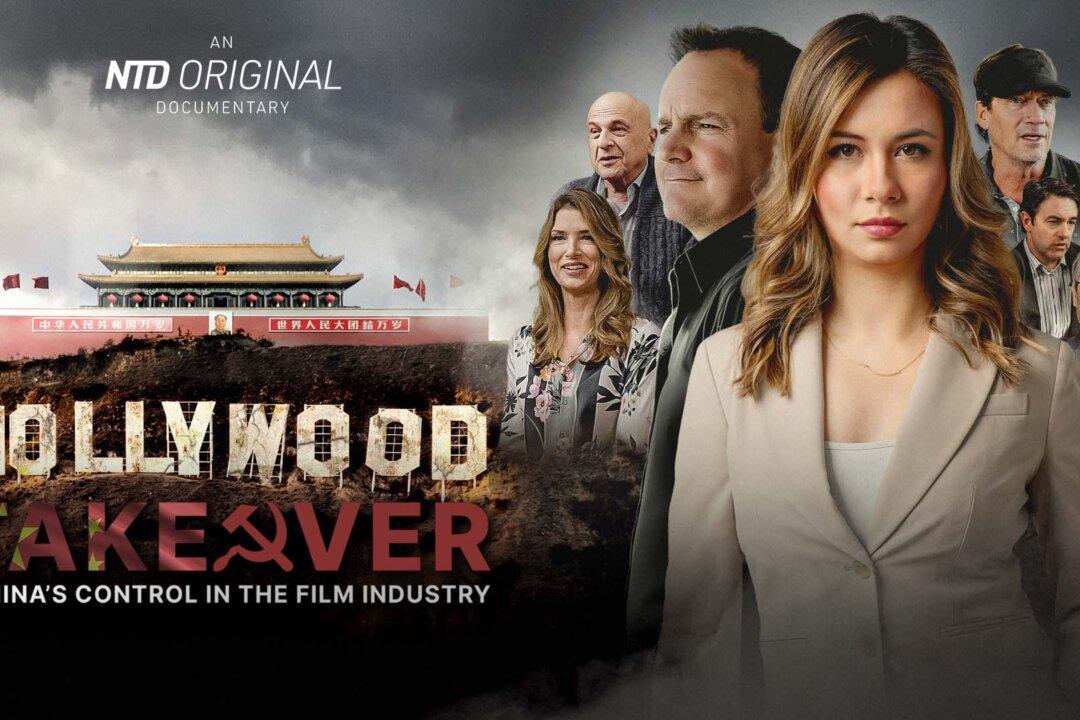
During the opening title sequence of “Hollywood Takeover: China’s Control in the Film Industry” (“Takeover”), a title card includes a quote from Mao Zedong, the sixth through 10th chairman of the Chinese Communist Party (CCP). It reads “There is in fact no such thing as art for art’s sake,” an obvious slam against the text “ars gratia artis” (Latin for “art for art’s sake”) surrounding the “Leo the Lion” logo at the start of all MGM studio productions.
What Mao meant (I think) was that while art, particularly film, is primarily an entertainment vehicle, it could and should also be used as a vessel for political and social propaganda, something not lost on each of his successors.
While China began banning foreign films in the early 20th century, with the increase in foreign trade, it began to allow some films to be shown. The CCP didn’t begin wielding its considerable “global exhibition muscle” in earnest until 1997 (more on that below). In 2008, just after the first Beijing Olympics and under the supervision of then-Chinese leader Hu Jintao, the CCP stepped up its game to full-blown censorship and manipulation of foreign films, particularly those produced in the United States.
https://youtu.be/TS_Q9Cuhwmk <click to watch trailer
It’s Never Going to Stop
Hosted by NTD news anchor Tiffany Meier, “Takeover” expertly examines the CCP’s ever-increasing influence over the U.S. film industry, and how and why that’s never likely to stop. The CCP’s principal concern is content that goes against, in the slightest manner, its social and political directives.
For instance, the 2012 movie “Looper” met resistance because of its time travel subplot, which, in the opinion of the CCP, could change events in the past and future, a big no-no. The CCP overlooked the time travel component and gave the film its “blessing” only after the film made clear that living in China in the future was better than living in France, and if a role for rising Chinese actress Xu Qing was added to the story. This was done, as was the inclusion of Ms. Xu’s image on the Chinese advertising poster and not on the American versions.
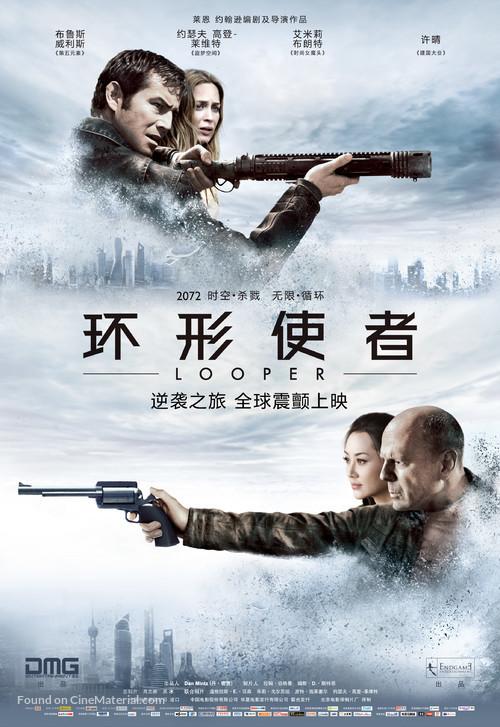
Chinese poster for “Looper” featuring Chinese actress Qing Lu. (TriStar Pictures)
CCP Control
In “Mission: Impossible III” (2006), Mr. Cruise’s character runs on rooftops of Shanghai homes where drying laundry is shown. The CCP didn’t want it to look like its citizens couldn’t afford dryers, so the images of the laundry were digitally removed from the final print.
In the trailer for “Top Gun: Maverick” (2022), there is a blink-and-you’ll-miss-it image of the back of Maverick’s bomber jacket as seen in the first film where flag patches of Taiwan and Japan appeared. They were removed at the request of the CCP-controlled Tencent Pictures. After Tencent backed out of the production, the images were reinstated.
In addition to direct intervention, the CCP has the power to censor films in other countries. The most recent example of CCP intervention of note was “Barbie” (2023), in which the title character stands in front of a map of Southeast Asia that depicts the Chinese “nine-dash line,” a purely fictional image of what the CCP mistakenly believes to be part of the Chinese empire. As a result of the map’s inclusion, “Barbie” was banned in Vietnam.
One of the more egregious examples of attempted CCP censorship isn’t included here. In 2019, Shannon Lee, who was raised in Hong Kong, voiced her displeasure with how her late father Bruce Lee was depicted in Quentin Tarantino’s “Once Upon a Time in Hollywood” (2019).
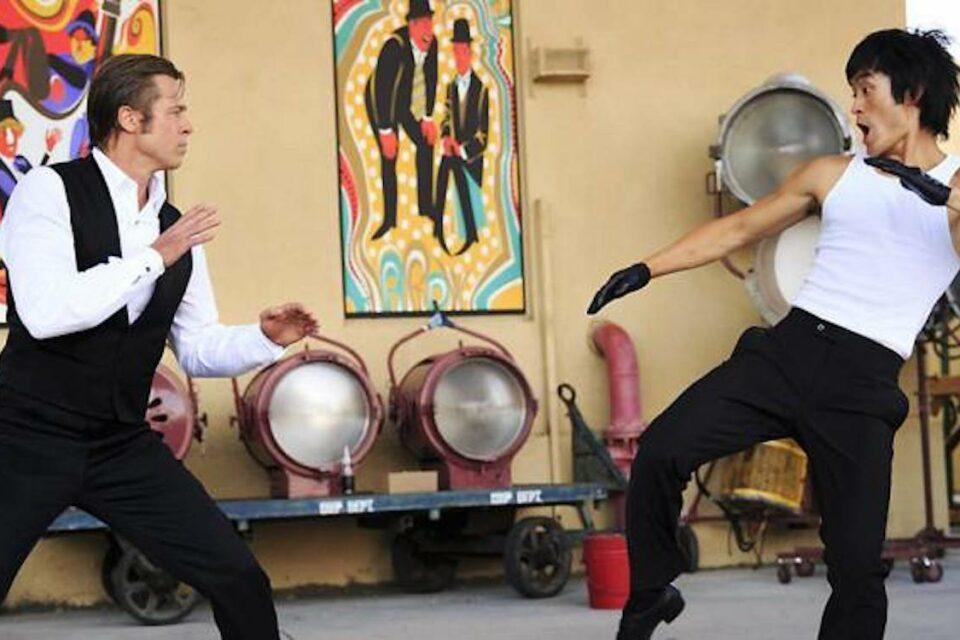
Ms. Lee contended that her father was made to look weak during an impromptu TV backlot fight scene between his character (Mike Moh) and a stunt man (Brad Pitt). Ms. Lee filed a complaint with the China Film Administration that in turn requested Mr. Tarantino remove the scene, which he refused to do. As a result, the CCP canceled the release of the film one week before its scheduled opening. To date, the movie has never played in China.
Pitt, Scorsese, and Gere
Speaking of Mr. Pitt, in 1997, he starred in one of three films targeted by the CCP. Because of the inclusion of a Dalai Lama character, “Seven Years in Tibet” (Columbia) and Martin Scorsese’s “Kundun” (Disney) were banned. As a result, Mr. Pitt and Mr. Scorsese were both prohibited from visiting China for 10 years. Because of its unflattering depiction of the CCP justice system, the third title, “Red Corner,” (MGM/UA) starring outspoken Tibetan activist Richard Gere, was also banned.
Making sure the issuing studios got the message, the CCP temporarily banned all films from these studios. During a 2020 testimony before the U.S. Senate Committee on Finance, Mr. Gere opined that because of the CCP clampdown, none of the aforementioned 1997 titles would ever be made today, and he was right.
Dwarfing what happened to Mr. Pitt, Mr. Scorsese, and Mr. Gere is what happened to Christian Bale. After showing public support for blind Chinese lawyer and civil rights activist Chen Guangcheng, the CCP banned all of Mr. Bale’s films.

Chris Fenton facilitates content and production terms between American studios and the CCP. (Feeding the Dragon)
Perhaps the most illuminating portion of the production are the interviews with Chris Fenton, a self-admitted “diplomat” between the Hollywood machine and the CCP. A man who started at the bottom of the industry food chain, Mr. Fenton worked his way up and ultimately facilitated content and production terms between studios and the CCP.
Arguably, Mr. Fenton’s biggest “achievement” came with the casting and marketing of Marvel’s “Iron Man 3” (2013). Mr. Fenton convinced Marvel to include a CCP protagonist supporting character, a physician named Dr. Wu (Wang Xueqi), and to persuade leading man Robert Downey Jr. to do fawning, borderline-sycophantic appearances in China, which many of Mr. Downey’s peers would likely consider to be “beneath” the usual calling of normal industry promotion. Mr. Fenton’s reflective and regretful self-questioning of his past motives is revelatory.
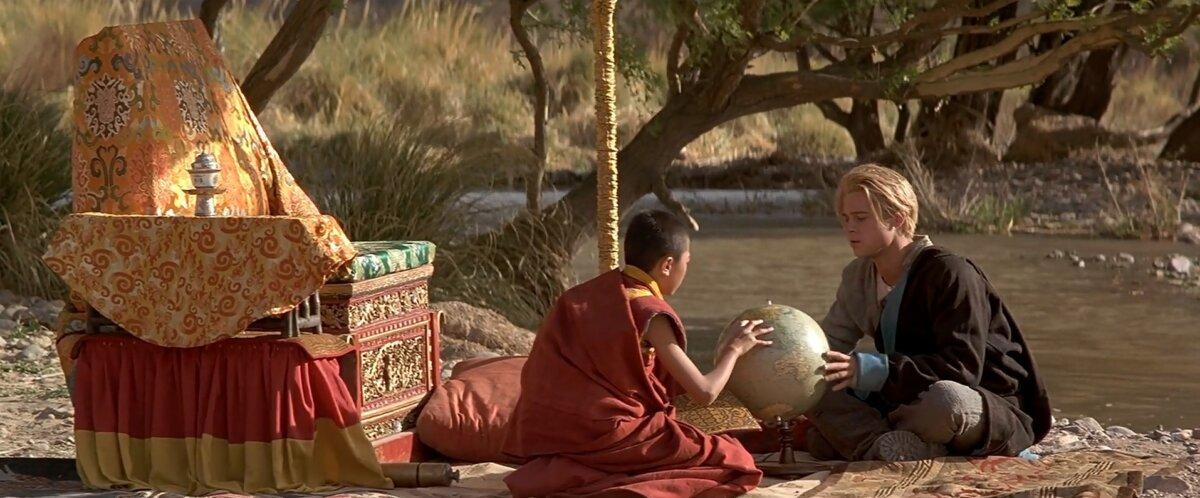
Tenzin Gyatso (Jamyang Jamtsho Wangchuk) and Heinrich Harrer (Brad Pitt) in “Seven Years in Tibet.” (Sony Pictures Releasing)
My only complaint about “Takeover” is that it wasn’t longer. At 64 minutes, it achieves its goals and then some with blazing efficiency and appropriate, unbiased, documentarian dispassion. Ms. Meier and writer-director Penny Zhou deserve the highest accolades for strictly adhering to the ethical and professional cornerstones of their respective journalistic disciplines.
As someone who believes the majority of TV and film productions often overstay their welcomes with extraneous padding and filler, “Takeover” only made me want more content. I strongly feel a follow-up sequel or part two is in order.
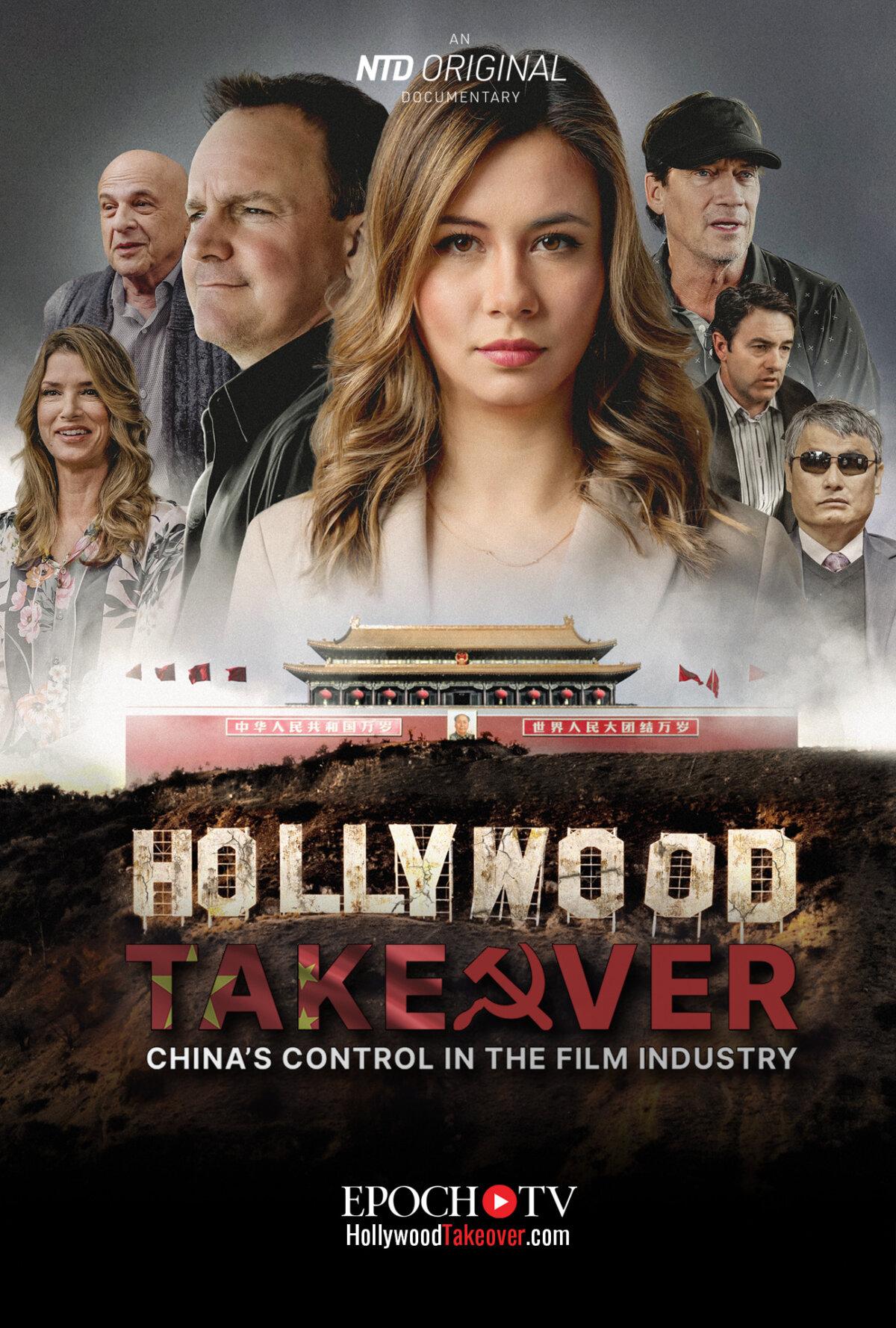
“Takeover” begins streaming on March 8 on Epoch TV.
Unfortunately, you must subscribe to Epoch TV to actually watch the document.
