Formally identified as perfluoroalkyl and polyfluoroalkyl substances, a group of manmade chemicals known as PFAS compounds are found in everything from soil and food to common household items and water. An overabundance of these compounds has been detected in U.S. drinking water and that of other industrialized nations, sparking discussion on control and mitigation among experts.
Exposure to PFAS has been linked to serious chronic health issues such as increased risk of certain cancers, fertility problems, and immune system challenges.
Unlike some industrial chemicals, PFAS don’t break down and are difficult to destroy, thus earning the moniker “forever chemicals.”
Since the 1940s, PFAS compounds have been used in everyday items such as nonstick cookware, water-repellent clothes, stain-resistant fabrics, cosmetics, and firefighting foams,
according to the Agency for Toxic Substances and Disease Registry.
Able to resist water, grease, oil, and heat, PFAS compounds quickly became popular. More than half a century later, these forever chemicals have become a growing health and environmental concern.
This year, the U.S. Environmental Protection Agency (EPA) said it has
observed forever chemicals in America’s groundwater at alarming levels, prompting the first-ever national, enforceable standard for drinking water, meant to protect communities from dangerous amounts of PFAS exposure.
“I believe this is a serious public health concern. From what I’ve seen in my work, chemical exposure—even at low levels—can affect communities long-term. And PFAS isn’t something that just disappears,” Previn Pillay, CEO of Pyromin Consulting, told The Epoch Times.
Pillay has dealt with complex water contamination issues including waste treatment and government compliance. He said forever chemicals can build up in people and the environment over time, causing a domino effect of negative consequences.
The U.S. Environmental Protection Agency building in Washington on Aug. 21, 2024. Tierney L. Cross/Getty Images
“Studies suggest that PFAS exposure can increase the risk of metabolic diseases, which is already becoming a growing issue in affected areas. I’ve seen how industrial contaminants, when not controlled, can cause health problems down the line. It’s something we just can’t ignore,” Pillay said.
Probable links between consumption of forever chemicals and negative health outcomes have been studied for years and the results paint a grim picture.
Erik D. Olson, the senior strategic director of health and food for the Natural Resources Defense Council,
said in April: “First, the structure of PFAS means they resist breakdown in the environment and in our bodies. Second, they move relatively quickly through the environment, making their contamination hard to contain. Third, for some PFAS, even extremely low levels of exposure can negatively impact our health.”
On its website, the EPA
states its new regulations are meant to “reduce PFAS exposure for approximately 100 million people, prevent thousands of deaths, and reduce tens of thousands of serious illnesses. EPA concurrently announced a further $1 billion to help states and territories implement PFAS testing and treatment at public water systems and to help owners of private wells address PFAS contamination.”
EPA
data show PFAS have been detected in 7,237 U.S. public water systems.
Among the related contaminants observed is lithium, a subclass of the forever chemicals group that’s also a growing concern,
according to the Pratt School of Engineering.
The National Institute of Environmental Health Science
states that nearly 15,000 synthetic substances fall into the forever chemicals category.
This year, at hundreds of drinking water sites across the country, the nonprofit Environmental Working Group
reported PFAS levels higher than the EPA’s
proposed limits of 4 and 10 parts per trillion. Coastal states have the highest concentrations of above-regulation forever chemical contamination.
In October, the U.S. Government Accountability Office
said PFAS may be America’s “biggest water problem since lead.”
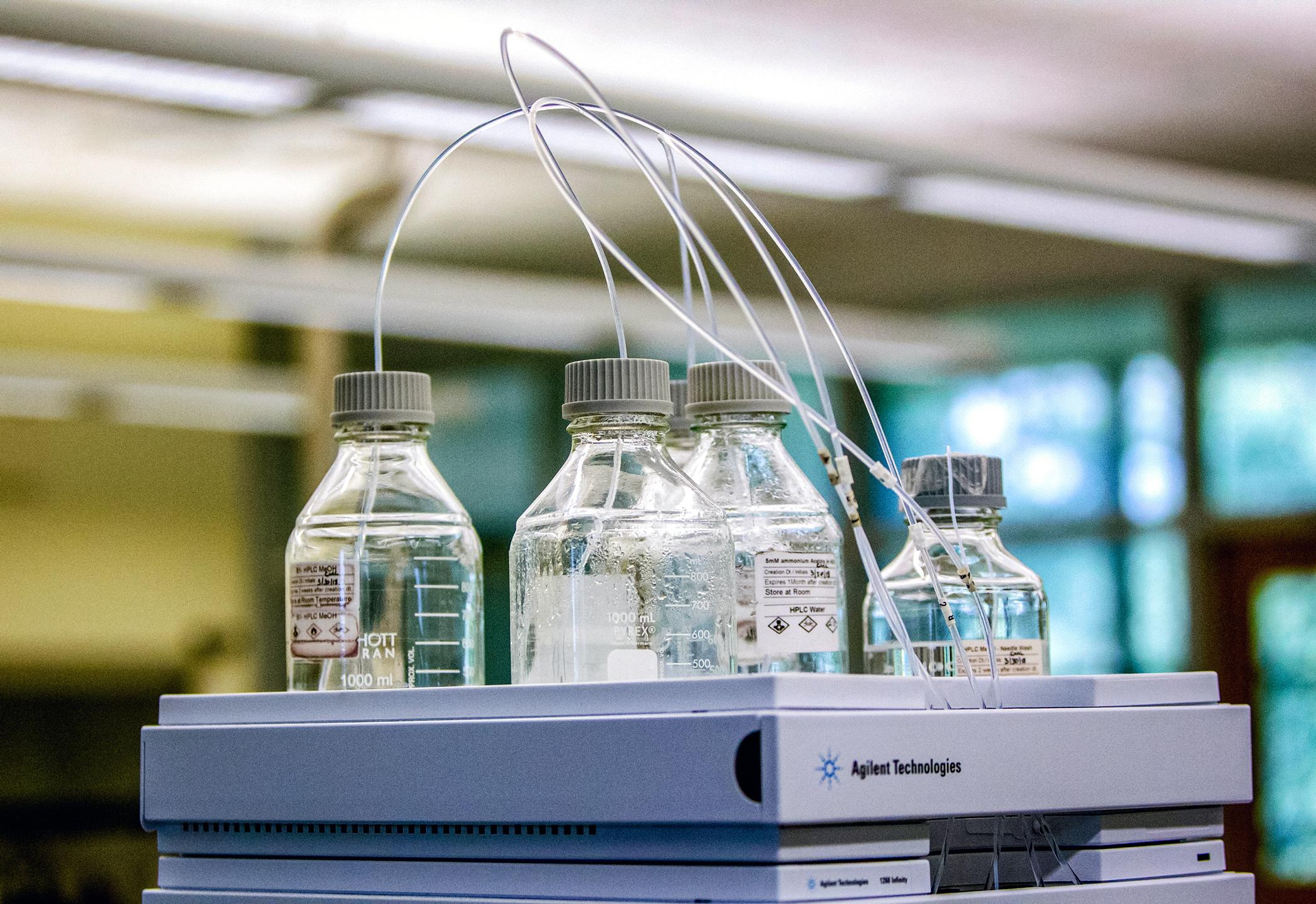
Equipment used to test for perfluoroalkyl and polyfluoroalkyl substances, known collectively as PFAS, in drinking water at Trident Laboratories in Holland, Mich., on June 18, 2018. Cory Morse/The Grand Rapids Press via AP
Life Cycle Consideration
“As someone deeply embedded in the water filtration business for decades, I can affirm that the presence of PFAS in drinking water is a pressing public health concern,” Brian McCowin told The Epoch Times.
McCowin is the service manager at McCowin Water, the business his father started.
“To manage PFAS better, collaboration between private sectors like ours and regulatory bodies is key,” McCowin said.
“We’ve successfully steered complex water issues by prioritizing ethical practices and transparency with clients. This approach could inspire improved standards and accountability across the board.”
Pillay also thinks cooperation is the fastest way to mitigate PFAS in American water.
“I think partnerships between private companies and government bodies can speed up solutions. Public-private partnerships would bring together the resources and expertise needed to drive faster water treatment innovations,” he said.
“If we’re going to manage this PFAS contamination better, we need both sectors working together, sharing knowledge, and accelerating the development of advanced filtration systems.”
Although filtration has always been the go-to solution for removing PFAS in water, some researchers believe the scope of the contamination requires a new approach.
An environmental engineering team at the University of California–Riverside (UCR)
published a study in July that discovered a special bacteria that can destroy certain types of forever chemicals. The microbes are already prevalent in wastewater.
In their observations, researchers noted the bacteria attack the previously impenetrable carbon-fluorine bond in PFAS compounds. This is a critical step towards removing the “forever” part of the chemicals.
A water district spokesman explains the ultraviolet light treatment process, the last stage of a three-part water purification system involving microfiltration, reverse osmosis, and ultraviolet light treatment to transform waste water into potable water, at West Basin Municipal Water District water recycling facility in El Segundo, Calif., on Sept. 14, 2015. Robyn Beck/AFP via Getty Images
“This is the first discovery of a bacterium that can do reductive defluorination of PFAS structures,” study author Yujie Men stated.
This isn’t the only breakthrough to come out of UCR this year. Another team led by chemical and environmental engineering professor Haizhou Liu
developed a process that takes advantage of the high salt levels at water treatment plants and uses them to break the carbon-fluorine bond. This is significant since the same waste salts normally hinder the cleanup process for other chemical pollutants.
How ‘Forever Chemicals’ Increase Cancer Risk
The discovery builds on Liu’s 2022 work that shows PFAS can be destroyed by treating contaminated water with short-wavelength ultraviolet light, without creating toxic byproducts.
“We were looking at PFAS with different carbon chains, short chains, and we also looked at salty wastewater that has a high concentration of chloride and sulfate,” Liu stated. “The results show that the salinity in wastewater acts as a catalyst when receiving the UV light to make this process even more effective and much faster.”
These new treatment methods show promise, but experts say it’s important to proceed with caution to avoid swapping one environmental problem for another.
“Remediation strategies are chosen that can decrease PFAS levels in water to applicable health-based criteria and thereby limit exposure of local populations to PFAS through ingestion of drinking water,” a March study
published in the journal Remediation stated.
“However, this approach does not consider the potential for human exposure throughout the life cycle of the remediation technology, in which spent media may need to be disposed of, regenerated, or destroyed over the many years the technology is likely to be in place.”
Methods researchers identified as needing evaluation to prevent environmental release and permit safe disposal of contaminants include filtration techniques such as activated charcoal and chemical treatments.
Pillay and McCowin agree that a careful approach is needed when removing PFAS from water, especially when using newer ideas such as microbes.
“While this could revolutionize how we handle contamination, scaling this to treat municipal supplies will require significant research to ensure no adverse ecological impacts arise,” McCowin said. “My experience with new technologies in water filtration highlights the need for rigorous testing before widespread deployment.”
A water researcher pours a water sample into a glass bottle as part of drinking water and PFAS research at the U.S. Environmental Protection Agency Center for Environmental Solutions and Emergency Response in Cincinnati on Feb. 16, 2023. Joshua A. Bickel/AP Photo
Pillay concurred and said using bacteria to tackle PFAS in water is interesting. He said he has seen “microbial solutions” work in other types of clean-up scenarios but scaling it up for public use presents a whole different challenge.
“That’s where it gets tricky. When we’ve introduced new systems in mining, scaling up often comes with unforeseen challenges, and I’d expect the same here. You have to consider things like the bacteria’s effectiveness across different water conditions and the potential ecological impacts. If we’re not careful, we could end up causing more harm than good,” he said.
Taking Action
PFAS are still pouring out of taps in U.S. homes. At a household level, special filters are currently the most effective method for removing forever chemicals from drinking water.
“For homeowners, using reverse osmosis filtration systems is one effective method to tackle PFAS contamination. These systems have been proven to reduce ‘forever chemicals’ significantly,” McCowin said.
He also said maintaining and disposing of old filters responsibly is critical to avoid any secondary pollution.
Pillay also believes filtration is the best option for Americans who want to drink PFAS-free water at home, but recommends ones that use an activated carbon block.
“Here’s the thing: These filters need regular replacement to stay effective. I’ve seen it too many times where systems fail simply because upkeep wasn’t prioritized. For homeowners, staying on top of filter changes is crucial to reducing exposure. It’s not a complete solution, but it’s a good start,” he said.
When asked about the safe disposal of PFAS-saturated filters, Pillay said it’s a catch-22 situation. “This reminds me of something we face often in my industry, solving one problem sometimes creates another.”
A handyman explains a new water filter to homeowners in Shiloh Commons in Flint, Mich., on Jan. 21, 2016. A reverse osmosis filtration system is an effective method for homeowners to remove PFAS from drinking water, according to Brian McCowin. Sarah Rice/Getty Images
Just throwing the spent filters in regular landfills may result in PFAS getting into the soil or air. In April, the EPA released interim
guidelines that covered options for safe disposal. Ones that were considered “lower potential” for environmental release than others include underground injection wells, hazardous material landfills, and thermal treatment.
Pillay said burning the filters may create a different problem since PFAS are unique among hazardous waste. “I know from my experience with hazardous materials that incineration is often suggested, but with PFAS, burning it at high temperatures could lead to toxic byproducts in the air. So, we need to think carefully about how we handle the waste we’re creating.”
He added, “If we don’t, we could end up trading water contamination for air pollution. It’s a tough balance and one that requires a lot more thought before making any decisions.”
COME LORD JESUS!!