Military Veterans Say These Dogs Saved Them From Crippling PTSD — ‘He’s Totally Changed My Life’

From nypost.com

They fight for our freedoms but often struggle to live their own lives freely due to post-traumatic stress disorder (PTSD).

Roughly 7% of all US service veterans have PTSD, with symptoms such as severe anxiety, sleep disturbances and agoraphobia.

For some struggling vets, a service dog proves invaluable.

“He’s totally changed my life,” said Tarik Griggs, whose Labrador-golden retriever Walter helps him deal with insomnia, nightmares, depression and much more. Meet him and three other vets and their devoted dogs.

Tarik Griggs, US Army veteran

Griggs got Walter four years ago. Courtesy of Jen Pottheiser

Growing up in Philly, Griggs had big plans for himself. Since money was tight, he enrolled in the military on his 18th birthday instead of going to college.

“At that time, it was expected of you to give to your country,” Griggs, 53, told The Post from his home in Somerville, NJ.

He served during the first Gulf War and emerged a changed man.

“The saying in the military was, ‘Suck it up and drive on,’” he said. “Push down all your emotions and deal with it later on.”

After re-entering civilian life in his 20s, he went on to get an MBA and work for various major financial firms, including JP Morgan and Vanguard.

“He’s my gift from God,” Griggs says of Walter. Courtesy of Jen Pottheiser

But his PTSD haunted him, and various medical conditions, including diabetes, compounded the pain.

“It was extremely hard and it’s still hard,” he said.

Four years ago, he was teamed up with Walter through Canine Companions, a national organization that provides trained service dogs to those with disabilities.

The highly skilled pup knows more than 40 professional commands, including turning lights on and off, creating space in a crowded public environment, disrupting anxious behavior and nightmare interruptions.

“There’s an emotional comfort and security that he’s always there, no matter what goes on,” Griggs said.  “If war breaks out or there’s a car accident, your service dog is there. I’m so thankful — he’s my gift from God.”

Dick St. Clair, US Navy veteran

Dick St. Clair was honorably discharged with “incurable” PTSD after two decades in the Navy. Olga Ginzburg for NY Post

The 40-year-old joined the Navy just after 9/11, fulfilling a childhood dream of serving his country. He spent 20 years in the service as an aviation boatswain’s mate dedicated to aviation and surface warfare, and deployed five times, to the Persian Gulf and elsewhere.

“Military relationships help you bond as a family,” said St. Clair. “You go through trauma — you look out for your buddy next to you.”

In 2022, he was honorably discharged after he was found to have “incurable” chronic PTSD following a breakdown during pandemic lockdowns.

The aftermath of two decades of intense service has been a lot.

St. Clair says he and service dog Ivy are “two peas in a pod.” Olga Ginzburg for NY Post

“I definitely have challenges every day,” he said of his end-stage arthritis in both knees and mental health conditions, including issues with crowds.

In 2023, he applied to Northwest Battle Buddies, a Washington-stated based organization that provides service dogs to vets with PTSD.

He was paired with Ivy, a black English lab who hasn’t left his side since. “We’re two peas in a pod,” said the vet. “I can now sit and do anything I want and not have to constantly look around … I never realized how much I was missing by the chaos that was happening in my brain.

This past summer, the Long Island native was able to attend a Chicago Cubs game, something he would never have been able to do without Ivy.

Ivy has helped him be able to manage his anxiety in crowded situations. Olga Ginzburg for NY Post

“She is my battle-buddy until the end,” said St. Clair. “I knew I had a problem and I didn’t want to be a statistic.”

He urges fellow vets to get help — and to know that there are alternatives, like service dogs, to going on medication.

“Don’t bury problems that won’t go away on their own,” he said. “Pick up the phone.”

Cortney, US Navy veteran

Cortney’s service dog Everest has helped her deal with her agoraphobia. Courtesy Photo

She grew up “an army brat” with multiple family members in the service and always knew she wanted to follow in their footsteps.

“I wanted to go places, to see things and protect people back home,” said the 39-year-old of her motivation to enlist at age 17 with parental consent.

She served about two years before being honorably discharged in 2005. But her time in the Navy was marred by sexual assault that has left scars, both physical and emotional. During one assault, she fell down a flight of stairs and suffered a traumatic brain injury (TBI).

Now, with triggers at every turn, she said she “can’t go into public places by [herself].” Her agoraphobia makes even basic tasks such as grocery shopping traumatic due to the crowds.

With Everest’s support, Cortney was able to go to a Yankees game. Courtesy Photo

She also suffers from migraines, nightmares and chronic muscle tension due to her PTSD.

“It’s a lifelong condition — it doesn’t go away,” said Courtney, who also has hearing loss from her TBI.

Last year, she turned to Guardian Revival, an organization that strives to revive and preserve the mental health and well-being of veterans and first responders.

In January, she was teamed up with Everest, a golden retriever-labradoodle, through Guardian’s Boots & Paws program.

“With Everest, I feel safe,” says Cortney. Courtesy Photo

“Before Everest I was afraid to go into public,” said the Dutchess county mother-of-five. Now, “all things are possible.”

This past summer, she was thrilled to attend a Yankees game with her service pup.

“He’ll tell me if someone’s coming up behind me … He never judges, never strays from me,” she said of her beloved service dog. “With Everest, I feel safe — just his presence makes all the difference … I feel like I can conquer the world now … It’s a match made in heaven.”

Mychal Watts, US Marine veteran

Mychal Watts struggled for decades before getting his service dog Connie. EMMY PARK

Growing up in Woodside, Queens, Watts, 68, was always fascinated by Marines and their stately uniforms. He secretly enlisted at age 18, without telling his mother beforehand.

“I needed to prove something to myself,” he said.

For five years, he lived his dream, rising to the rank of sergeant and spending more than a year stationed in Japan.

Connie once licked him to prevent him from passing out from a serious PTSD episode. EMMY PARK

But the toll of service abroad and “fighting demons” was crushing. “I had trouble with focus— I just wanted to lie down and sleep, but I had nightmares.”

Watts, who now works as a photographer for Getty and lives in Harlem, suffered in silence for almost two decades.  “It took me almost 20 years before I could talk about it,” he said.

Two years ago, he turned to Operation Warrior Shield. The Brooklyn-based organization provides support to vets and first responders and helped Watts get his service dog, Connie.

“It was love at first sight — the first thing she did was turn over on her belly,” he says of Connie. EMMY PARK

‘Forever Chemicals’ In US Drinking Water: A Growing Problem

From zerohedge.com

Formally identified as perfluoroalkyl and polyfluoroalkyl substances, a group of manmade chemicals known as PFAS compounds are found in everything from soil and food to common household items and water. An overabundance of these compounds has been detected in U.S. drinking water and that of other industrialized nations, sparking discussion on control and mitigation among experts.

Exposure to PFAS has been linked to serious chronic health issues such as increased risk of certain cancers, fertility problems, and immune system challenges.

Unlike some industrial chemicals, PFAS don’t break down and are difficult to destroy, thus earning the moniker “forever chemicals.”

Since the 1940s, PFAS compounds have been used in everyday items such as nonstick cookware, water-repellent clothes, stain-resistant fabrics, cosmetics, and firefighting foams, according to the Agency for Toxic Substances and Disease Registry.

Able to resist water, grease, oil, and heat, PFAS compounds quickly became popular. More than half a century later, these forever chemicals have become a growing health and environmental concern.

This year, the U.S. Environmental Protection Agency (EPA) said it has observed forever chemicals in America’s groundwater at alarming levels, prompting the first-ever national, enforceable standard for drinking water, meant to protect communities from dangerous amounts of PFAS exposure.

“I believe this is a serious public health concern. From what I’ve seen in my work, chemical exposure—even at low levels—can affect communities long-term. And PFAS isn’t something that just disappears,” Previn Pillay, CEO of Pyromin Consulting, told The Epoch Times.

Pillay has dealt with complex water contamination issues including waste treatment and government compliance. He said forever chemicals can build up in people and the environment over time, causing a domino effect of negative consequences.

image-5757175
The U.S. Environmental Protection Agency building in Washington on Aug. 21, 2024. Tierney L. Cross/Getty Images

“Studies suggest that PFAS exposure can increase the risk of metabolic diseases, which is already becoming a growing issue in affected areas. I’ve seen how industrial contaminants, when not controlled, can cause health problems down the line. It’s something we just can’t ignore,” Pillay said.

Probable links between consumption of forever chemicals and negative health outcomes have been studied for years and the results paint a grim picture.

Erik D. Olson, the senior strategic director of health and food for the Natural Resources Defense Council, said in April: “First, the structure of PFAS means they resist breakdown in the environment and in our bodies. Second, they move relatively quickly through the environment, making their contamination hard to contain. Third, for some PFAS, even extremely low levels of exposure can negatively impact our health.”
On its website, the EPA states its new regulations are meant to “reduce PFAS exposure for approximately 100 million people, prevent thousands of deaths, and reduce tens of thousands of serious illnesses. EPA concurrently announced a further $1 billion to help states and territories implement PFAS testing and treatment at public water systems and to help owners of private wells address PFAS contamination.”
EPA data show PFAS have been detected in 7,237 U.S. public water systems.
Among the related contaminants observed is lithium, a subclass of the forever chemicals group that’s also a growing concern, according to the Pratt School of Engineering.
The National Institute of Environmental Health Science states that nearly 15,000 synthetic substances fall into the forever chemicals category.
This year, at hundreds of drinking water sites across the country, the nonprofit Environmental Working Group reported PFAS levels higher than the EPA’s proposed limits of 4 and 10 parts per trillion. Coastal states have the highest concentrations of above-regulation forever chemical contamination.
In October, the U.S. Government Accountability Office said PFAS may be America’s “biggest water problem since lead.”
image-5757174
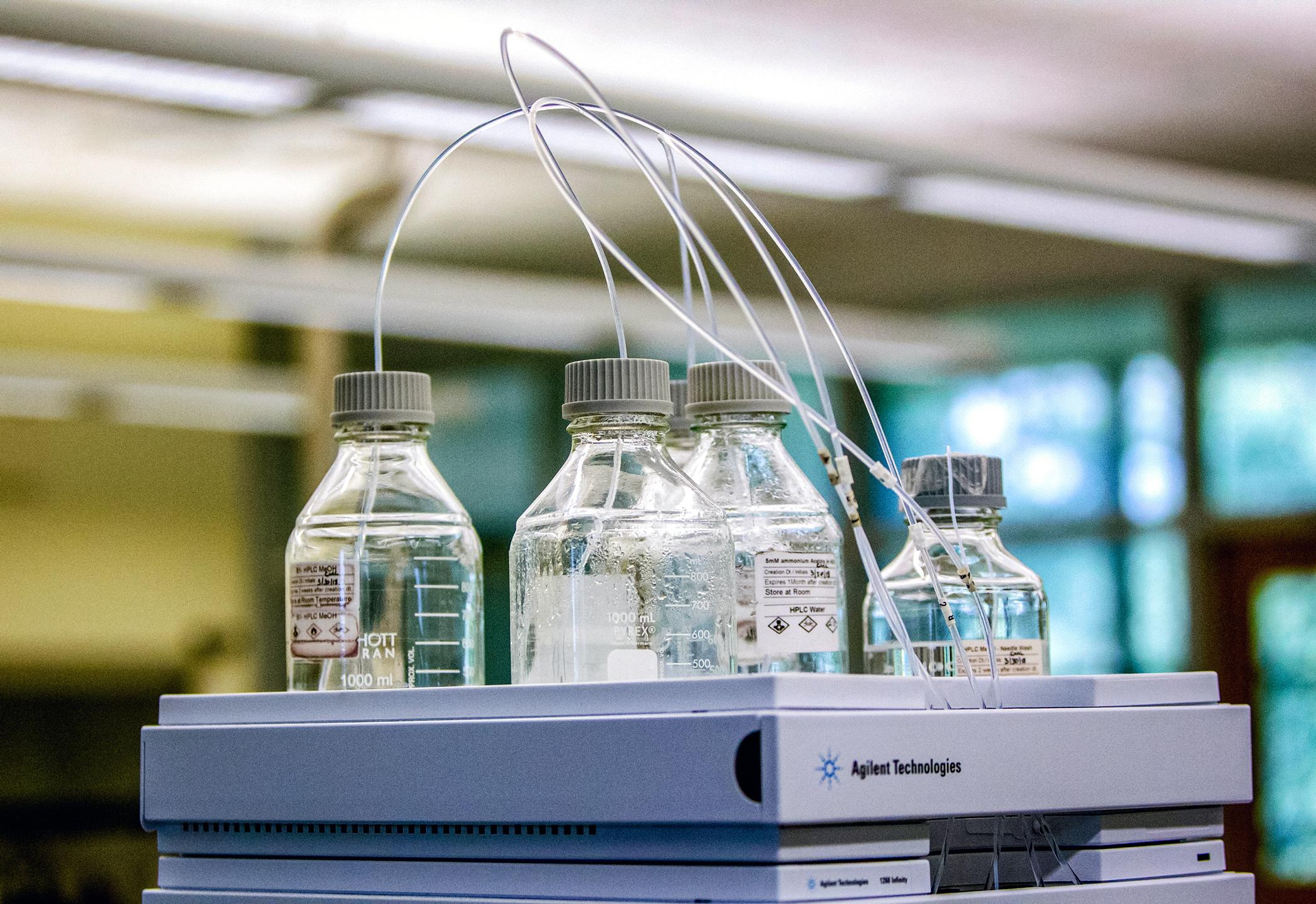
Equipment used to test for perfluoroalkyl and polyfluoroalkyl substances, known collectively as PFAS, in drinking water at Trident Laboratories in Holland, Mich., on June 18, 2018. Cory Morse/The Grand Rapids Press via AP

Life Cycle Consideration

“As someone deeply embedded in the water filtration business for decades, I can affirm that the presence of PFAS in drinking water is a pressing public health concern,” Brian McCowin told The Epoch Times.

McCowin is the service manager at McCowin Water, the business his father started.

“To manage PFAS better, collaboration between private sectors like ours and regulatory bodies is key,”  McCowin said.

“We’ve successfully steered complex water issues by prioritizing ethical practices and transparency with clients. This approach could inspire improved standards and accountability across the board.”

Pillay also thinks cooperation is the fastest way to mitigate PFAS in American water.

“I think partnerships between private companies and government bodies can speed up solutions. Public-private partnerships would bring together the resources and expertise needed to drive faster water treatment innovations,” he said.

“If we’re going to manage this PFAS contamination better, we need both sectors working together, sharing knowledge, and accelerating the development of advanced filtration systems.”

Although filtration has always been the go-to solution for removing PFAS in water, some researchers believe the scope of the contamination requires a new approach.

An environmental engineering team at the University of California–Riverside (UCR) published a study in July that discovered a special bacteria that can destroy certain types of forever chemicals. The microbes are already prevalent in wastewater.

In their observations, researchers noted the bacteria attack the previously impenetrable carbon-fluorine bond in PFAS compounds. This is a critical step towards removing the “forever” part of the chemicals.

image-5757173
A water district spokesman explains the ultraviolet light treatment process, the last stage of a three-part water purification system involving microfiltration, reverse osmosis, and ultraviolet light treatment to transform waste water into potable water, at West Basin Municipal Water District water recycling facility in El Segundo, Calif., on Sept. 14, 2015. Robyn Beck/AFP via Getty Images

“This is the first discovery of a bacterium that can do reductive defluorination of PFAS structures,” study author Yujie Men stated.

This isn’t the only breakthrough to come out of UCR this year. Another team led by chemical and environmental engineering professor Haizhou Liu developed a process that takes advantage of the high salt levels at water treatment plants and uses them to break the carbon-fluorine bond. This is significant since the same waste salts normally hinder the cleanup process for other chemical pollutants.

How ‘Forever Chemicals’ Increase Cancer Risk

How ‘Forever Chemicals’ Increase Cancer Risk

The discovery builds on Liu’s 2022 work that shows PFAS can be destroyed by treating contaminated water with short-wavelength ultraviolet light, without creating toxic byproducts.

“We were looking at PFAS with different carbon chains, short chains, and we also looked at salty wastewater that has a high concentration of chloride and sulfate,” Liu stated. “The results show that the salinity in wastewater acts as a catalyst when receiving the UV light to make this process even more effective and much faster.”

These new treatment methods show promise, but experts say it’s important to proceed with caution to avoid swapping one environmental problem for another.

“Remediation strategies are chosen that can decrease PFAS levels in water to applicable health-based criteria and thereby limit exposure of local populations to PFAS through ingestion of drinking water,” a March study published in the journal Remediation stated.

“However, this approach does not consider the potential for human exposure throughout the life cycle of the remediation technology, in which spent media may need to be disposed of, regenerated, or destroyed over the many years the technology is likely to be in place.”

Methods researchers identified as needing evaluation to prevent environmental release and permit safe disposal of contaminants include filtration techniques such as activated charcoal and chemical treatments.

Pillay and McCowin agree that a careful approach is needed when removing PFAS from water, especially when using newer ideas such as microbes.

“While this could revolutionize how we handle contamination, scaling this to treat municipal supplies will require significant research to ensure no adverse ecological impacts arise,” McCowin said. “My experience with new technologies in water filtration highlights the need for rigorous testing before widespread deployment.”

image-5757172
A water researcher pours a water sample into a glass bottle as part of drinking water and PFAS research at the U.S. Environmental Protection Agency Center for Environmental Solutions and Emergency Response in Cincinnati on Feb. 16, 2023. Joshua A. Bickel/AP Photo

Pillay concurred and said using bacteria to tackle PFAS in water is interesting. He said he has seen “microbial solutions” work in other types of clean-up scenarios but scaling it up for public use presents a whole different challenge.

“That’s where it gets tricky. When we’ve introduced new systems in mining, scaling up often comes with unforeseen challenges, and I’d expect the same here. You have to consider things like the bacteria’s effectiveness across different water conditions and the potential ecological impacts. If we’re not careful, we could end up causing more harm than good,” he said.

Taking Action

PFAS are still pouring out of taps in U.S. homes. At a household level, special filters are currently the most effective method for removing forever chemicals from drinking water.

“For homeowners, using reverse osmosis filtration systems is one effective method to tackle PFAS contamination. These systems have been proven to reduce ‘forever chemicals’ significantly,” McCowin said.

He also said maintaining and disposing of old filters responsibly is critical to avoid any secondary pollution.

Pillay also believes filtration is the best option for Americans who want to drink PFAS-free water at home, but recommends ones that use an activated carbon block.

“Here’s the thing: These filters need regular replacement to stay effective. I’ve seen it too many times where systems fail simply because upkeep wasn’t prioritized. For homeowners, staying on top of filter changes is crucial to reducing exposure. It’s not a complete solution, but it’s a good start,” he said.

When asked about the safe disposal of PFAS-saturated filters, Pillay said it’s a catch-22 situation. “This reminds me of something we face often in my industry, solving one problem sometimes creates another.”

image-5757171
A handyman explains a new water filter to homeowners in Shiloh Commons in Flint, Mich., on Jan. 21, 2016. A reverse osmosis filtration system is an effective method for homeowners to remove PFAS from drinking water, according to Brian McCowin. Sarah Rice/Getty Images
Just throwing the spent filters in regular landfills may result in PFAS getting into the soil or air. In April, the EPA released interim guidelines that covered options for safe disposal.  Ones that were considered “lower potential” for environmental release than others include underground injection wells, hazardous material landfills, and thermal treatment.

Pillay said burning the filters may create a different problem since PFAS are unique among hazardous waste. “I know from my experience with hazardous materials that incineration is often suggested, but with PFAS, burning it at high temperatures could lead to toxic byproducts in the air. So, we need to think carefully about how we handle the waste we’re creating.”

He added, “If we don’t, we could end up trading water contamination for air pollution. It’s a tough balance and one that requires a lot more thought before making any decisions.”

COME LORD JESUS!!

Trump Win Throws UN “Climate” Summit Into Disarray

From libertysentinel.com

By Alex Newman

Climate officials in the Biden administration and around the world are working overtime to “Trump-proof” the United Nations “climate” process ahead of the upcoming UN COP29 summit in Azerbaijan. But despite their best efforts, President-elect Donald Trump’s historic return to power next year is already dramatically shaking up the whole summit and the broader movement it represents.

At the very least, Trump’s well-known hostility to globalism and the “climate scam” will overshadow the alarmism pushed by the UN, the Chinese Communist Party (CCP), Joe Biden, and many others. Some analysts believe it could even kill the whole movement that rests on an increasingly discredited hypothesis that Trump has repeatedly described as a “dangerous hoax.”

During his last term, Trump famously ended U.S. involvement in the controversial UN Paris Agreement. Under the scheme, Barack Obama pledged that the U.S. government would decimate the American economy while Communist Chinese rulers vowed to keep building coal-fired power plants until at least 2030. Trump’s second term is likely to be even more brutal to the “climate” agenda.

What Will Trump Do?

Former Trump EPA Chief of Staff Mandy Gunasekara warned that the gloves would be coming off on the climate front in Trump’s second term. There is even serious talk of a U.S. withdrawal from the underlying treaty that the Paris accord was built on, the 1992 UN Framework Convention on Climate Change (UNFCCC).

Discussing her new book Y’all Fired on The Liberty Report last month, she explained:

I do think that President Trump will understand and not be burdened by insignificant arguments that, “Oh, we need a seat at this table,” or, “Oh, this is really going to matter in terms of our relationship for other international issues.” I think the gloves will absolutely come off.

“The Paris accord is a subcomponent of something called the UNFCCC, an actual treaty that went through the Senate,” she continued:

We need to get out. And Trump has the tools to get out of that treaty, which is going to shut down a lot of the derivative shenanigans, including things like the Paris climate accord being used to push onerous regulations on the United States, again, while the rest of the world gets a free pass.

With significant GOP majorities expected in the Senate and likely in the House as well, climate alarmists in Congress and worldwide are right to be worried. While a handful of liberal “Republicans in Name Only” (RINOs) have jumped on the global-warming bandwagon, they represent a fringe view within the party and are likely to be under tremendous pressure from their unbelieving constituents and colleagues.

Trump has also been clear that the climate “hoax” will be a top target of his next term. In a 2022 talk in Florida in which he lambasted “green” energy and the alarmism surrounding CO2he argued:

One of the most urgent tasks, not only for our movement, but for our country, is to decisively defeat the climate hysteria hoax.

The president-elect also ridiculed sea-level prognostications, saying:

The ocean is rising. It’s rising. It’s coming. It’s within 300 … years. We’re going to gain one-hundredth of an inch in the ocean and have a little more beachfront property. It’s going to be a terrible thing. No, it’s a hoax. The whole thing is a total hoax…. It’s so crazy.

Activist Hand-wringing

There was no shortage of activists warning of imminent doom due to the election. Comments by policy director Rachel Cleetus with the far-left Union of Concerned Scientists were representative of the movement’s despair. “The nation and world can expect the incoming Trump administration to take a wrecking ball to global climate diplomacy,” she said.

Some of the hand-wringing bordered on the hysterical and outright ridiculous. After the election, global “climate” leader Michael Mann of ClimateGate infamy claimed Trump’s victory showed that the United States was officially a “failed democracy” (it’s actually a republic) that now poses a “major threat to the entire planet.” Critics in the scientific community have described his posts as increasingly “unhinged.”

The Fix Is In

Still, despite the doom and gloom, U.S. climate activists even at a high level have indicated that the fix is in. Last year, this writer asked a delegation of seven U.S. senators at the UN climate summit in Dubai about how they could make credible “climate” pledges considering the prospect of Trump returning to power and the fact that most Americans reject the man-made warming hypothesis.

Senator Chris Coons (D-Del.), who responded to the question at the urging of Senate Foreign Relations Committee Chairman Ben Cardin (D-Md.), touted the “tens of billions of [tax] dollars” flowing to GOP-controlled states under the deceitfully named “Inflation Reduction Act.” He also pointed to tax money flowing under the “Infrastructure” bill that will supposedly keep Republican states hooked. Said Coons:

Am I suggesting that, were the former president to be our next president, everything would be fine? No. But I’m saying that there is a broad enough and deep enough support for continuing investments to combat climate change and for the Inflation Reduction Act and the Bipartisan Infrastructure law.… We’ll continue to move forward regardless.

Other climate activists take the same tone. For instance, World Resources Institute U.S. Director Dan Lashof noted:

There is no denying that another Trump presidency will stall national efforts to tackle the climate crisis and protect the environment, but most U.S. state, local, and private sector leaders are committed to charging ahead.

Indeed, last time Trump was president, a significant coalition of alarmist governors, mayors, and business leaders from across the country — almost exclusively left-wing Democrats — formed a coalition called “We Are Still In” to continue playing along with the UN climate process. While it did not totally fill the gap left by federal money and power, it helped keep spirits high at the UN summits.

Alarmists Vow to Continue Even Without the U.S.

Former EPA boss and Biden climate advisor Gina McCarthy, who serves as co-chair of the “America Is All In” coalition of alarmist state and city governments, vowed that nothing would stop the climate juggernaut now — not even voters or those they elect:

No matter what Trump may say, the shift to clean energy is unstoppable and our country is not turning back.

Our coalition is bigger, more bipartisan, better organized, and fully prepared to deliver climate solutions, boost local economies and drive climate ambition. We cannot and will not let Trump stand in the way of giving our kids and grandkids the freedom to grow up in safer and healthier communities.

The CCP is also hoping to make the best of the new paradigm by strengthening its “climate leadership” alliance with the European Union. China Climate Hub boss Li Shuo lamented the loss of “U.S.-China political leadership” at COP29. He said that gap would need to be “filled” by the CCP and the EU, telling Reuters:

A strengthened climate alliance with Europe and China at the center is our best hope for the next few years.

Architects of the Paris Agreement also sounded optimistic about the prospect of keeping the alarmism going even without the U.S. government funding it all for the next four years. “The US election result is a setback for global climate action, but the Paris agreement has proven resilient and is stronger than any single country’s policies,” said European Climate Foundation chief Laurence Tubiana.

Claiming recent hurricanes highlight the seriousness of alleged man-made climate change, she said the “transition” would continue with or without Trump. “The context today is very different to 2016,” said Ms. Tubiana, who played a key role in creating the Paris scheme. “There is powerful economic momentum behind the global transition, which the U.S. has led and gained from, but now risks forfeiting.”

Damage Control

Efforts are already underway to keep the United States ensnared in the UN’s climate scheming despite the election, too. Bloomberg News, founded by radical climate alarmist and CO2-spewing billionaire Mike Bloomberg, noted that “worried stakeholders” are working frantically to mitigate the damage Trump might be able to do ahead of COP29:

Officials from Maryland and California have met with Chinese officials to discuss continued climate collaboration at the subnational level, allowing state and local governments to pick up any slack. Some state representatives were part of meetings in Beijing in September while the chief US climate negotiator, John Podesta, engaged in talks with his Chinese counterpart.

Scientists Back Trump

Over a decade ago, Trump warned that the “global warming” narrative was a “hoax” to benefit the Communist Chinese. Ironically, Dr. William Happer, who served as Trump’s climate advisor in his first term, told The New American last year that the “climate” movement was not about saving the climate, but about controlling people — a sort of throwback to Soviet tyranny.

“CO2 is actually good for the world, so people ought to be encouraged to make more of it,” he explained. Some of those promoting the UN narrative have been “misinformed, badly,” and there are also others who simply need “something to believe in,” he said. But ultimately, “it’s the same evil fanaticism that has plagued mankind since we began.”

Numerous leading climate scientists were excited about the effect the election will have on the summit and the broader climate debate. Longtime Harvard astrophysicist Willie Soon, who broke away from Harvard and co-founded the independent Center for Environmental Research and Earth Sciences and was recently a guest on Tucker Carlson’ show, celebrated the news of Trump’s win.

He also told The New American that Trump should work to reset the whole “climate” discussion. “It is clear that the endless climate alarmism and faulty climate science need a forceful reset,” said Soon, who has authored numerous studies highlighting the role of the sun in warming. “The 47th President of the United States ought to provide such a critical boost for climate science to be great and real again.”

Continue reading at The New American